
Social Series Recap – First Point of Contact
31st July 2026

In July, our social media series explored the importance of the first point of contact and the role it plays in creating a positive, reassuring and reliable service experience.
In healthcare engineering, the first response can influence everything that follows. From the way an enquiry is handled to the confidence given to clinical teams, every interaction contributes to trust, communication and effective support.
Below is a look back at the themes we discussed throughout the month.
Part 1 – Why First Contact Matters
We began the month by looking at why first contact is so important. When support is needed, timely communication and knowledgeable guidance can make a significant difference. The right response at the right time helps services continue to run smoothly and gives healthcare teams confidence when it matters most. We emphasised that first point of contact is not simply about receiving an enquiry. It is about understanding the situation, providing reassurance and setting the service journey on the right path.

Part 2 – Support Starts with Listening
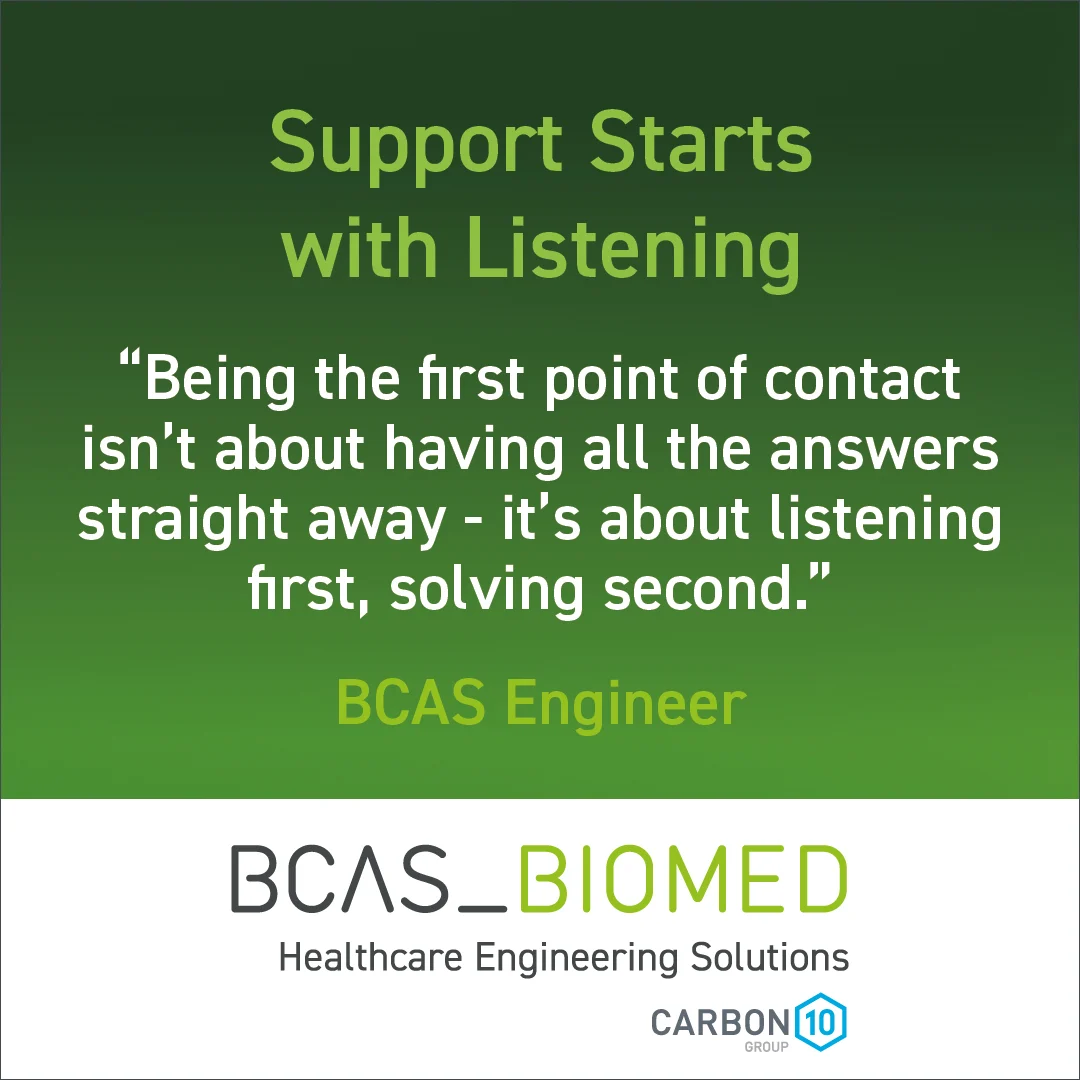
Our next post focused on the value of listening. Using a quote from one of our engineers, we explored how listening is often the most valuable part of a first interaction. Rather than having every solution immediately, effective support begins with taking the time to understand medical staff’s needs. We invited our audience to share what they value most in a first response, whether that’s speed, empathy or expertise.
Part 3: Setting the Tone
The first interaction can shape the entire customer experience. We discussed how professional, supportive and reliable communication sets the tone for everything that follows, reinforcing the idea that first contact is more than an administrative process. It should be seen as part of the wider service culture. The tone of an email, telephone call or conversation can influence how supported an individual feels and how much confidence they place in the service they receive.

Part 4 – Every Interaction Shapes Trust
Throughout the series, we also considered how every interaction contributes to trust.
Whether communication takes place by telephone, email or face to face, first impressions are important. In healthcare, where equipment performance can have a direct impact on clinical services, clear and confident communication is particularly valuable. Every contact is an opportunity to demonstrate reliability, professionalism and a commitment to supporting patient care.
.
Part 5 – Confidence Through Responsiveness
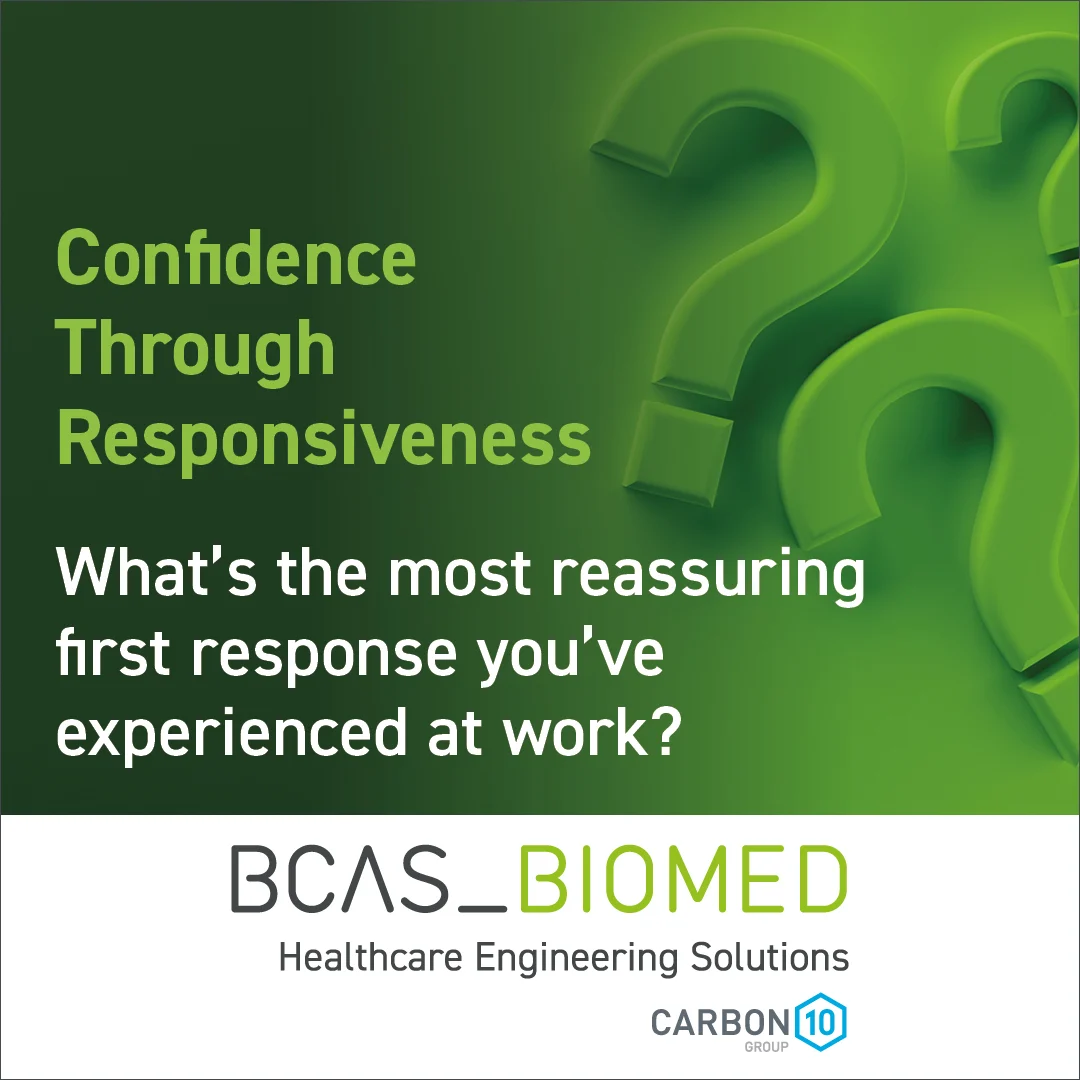
A quick response is not only about speed. It is also about reassurance. During stressful or time sensitive situations, a timely reply lets healthcare staff know that their enquiry has been received and that support is available. Even before an issue has been resolved, effective communication can reduce pressure and give teams greater confidence. Responsiveness helps create a sense of control and ensures that people understand what will happen next.
Part 6 – The Three Traits of Effective Support
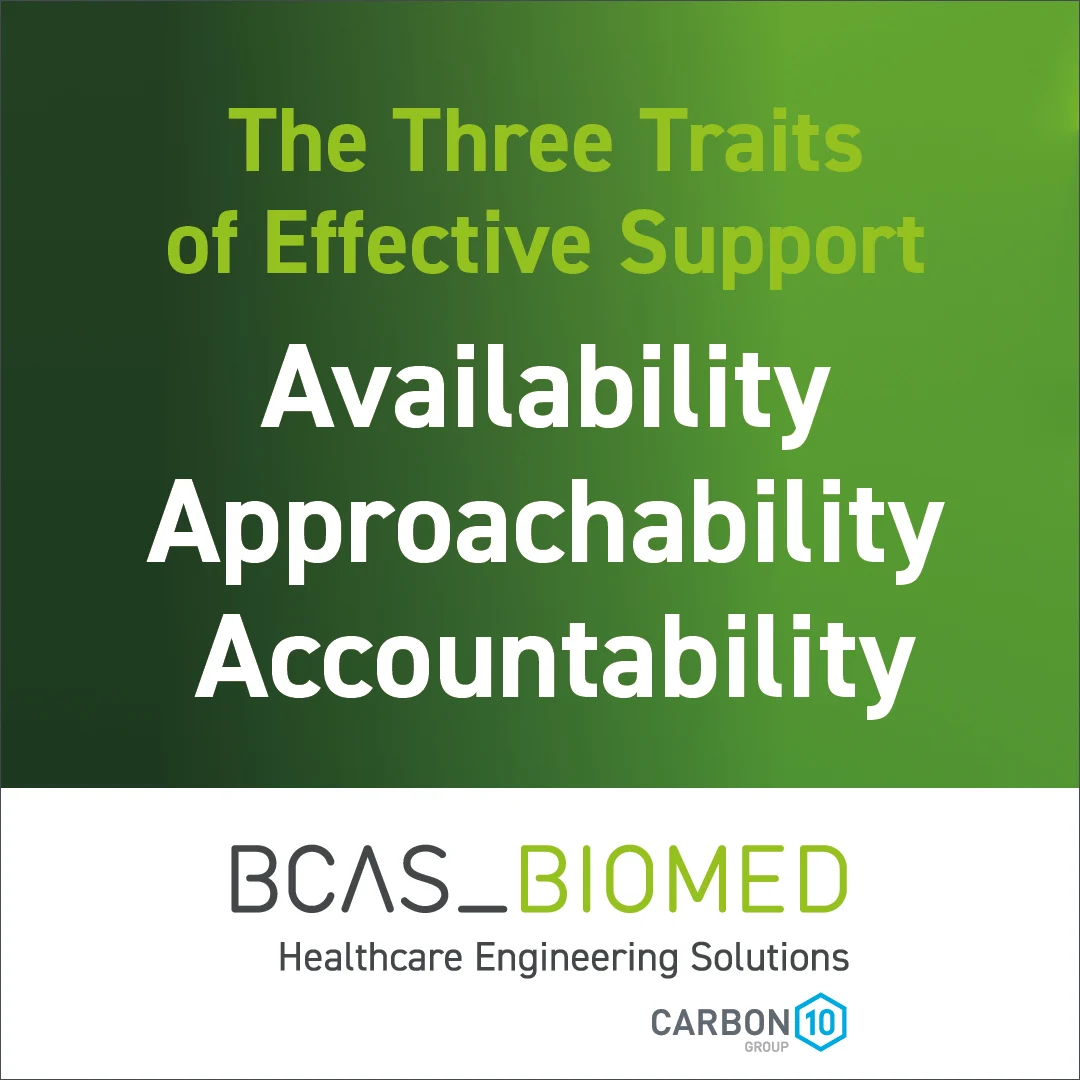
Later in the month, we highlighted three qualities that help define an effective first point of contact:
Availability
Customers need to know that support can be accessed when it is required.
Approachability
People should feel comfortable raising concerns, asking questions and requesting guidance.
Accountability
Every enquiry should be handled with ownership, clear communication and a commitment to reaching the right resolution.
Together, these qualities can turn a stressful situation into a more manageable and positive experience. Prompting discussion around the realities of delivering excellent support in busy healthcare environments.
Part 7 – Building a Culture of Support
We highlighted how dependable first points of contact are the foundation of trust and good communication, a reminder that behind every smooth service is a team committed to helping from the very first interaction.
When support teams consistently listen, respond and take responsibility, they help create a culture in which people feel valued and confident. By combining technical knowledge with responsive and professional communication, we support healthcare teams and help them maintain focus on patient care.

Part 8 – Why First Contact Matters Wrap Up
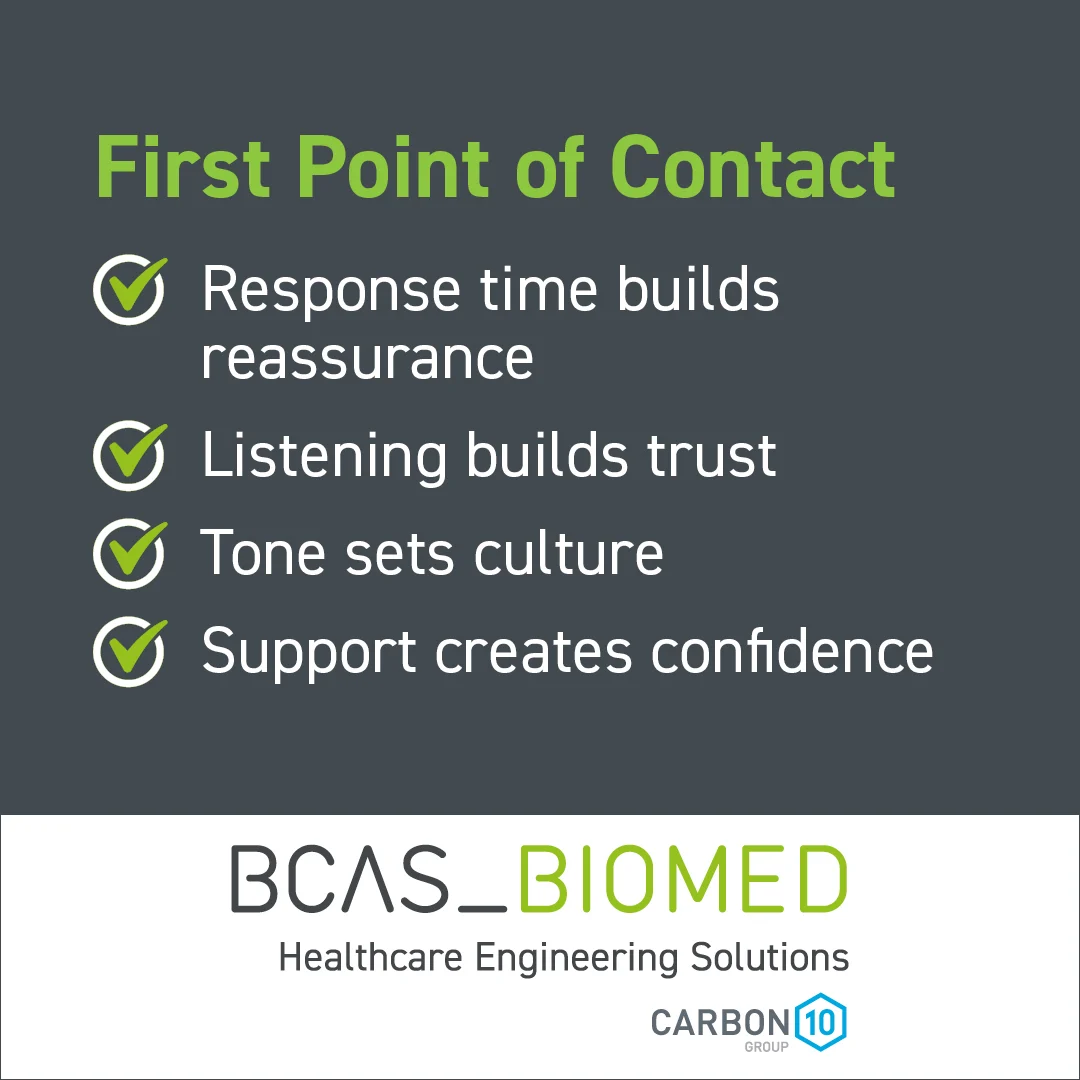
We concluded July with a summary of the campaign’s key messages, bringing together the four themes that had been explored throughout the month. The final post invited our audience to reflect on the one quality they value most in a first point of contact, providing a natural conclusion to the discussion.
The aim over the month was to demonstrate that great healthcare engineering support begins long before an engineer arrives on site. Every conversation, every response and every interaction play a part in building trust and confidence, reinforcing BCAS Biomedical’s commitment to delivering professional, responsive support to healthcare organisations.
Latest News
