
Social Series Recap – Planning Ahead
31st March 2026

Throughout March, BCAS Biomedical (Part of the Carbon 10 Group) explored ‘Planning Ahead’, a series focused on the power of foresight in keeping healthcare environments efficient, reliable and patient-focused.
Across the month, the conversation highlighted a simple but important idea: when planning leads, pressure doesn’t have to.
Here’s a look back at the key reflections from each stage of the series.
Part 1 – Proactive vs Reactive
The series opened by challenging the idea that emergency callouts are just part of the job.
While they may feel inevitable, many issues can be avoided altogether. Planning servicing schedules in advance helps protect budgets, reduce stress and ensure patient care remains uninterrupted.
This first reflection asked: how much of your work is proactive versus reactive?

Part 2 – Plan Early. Work Calmly.
Planning was then positioned as more than just logistics.
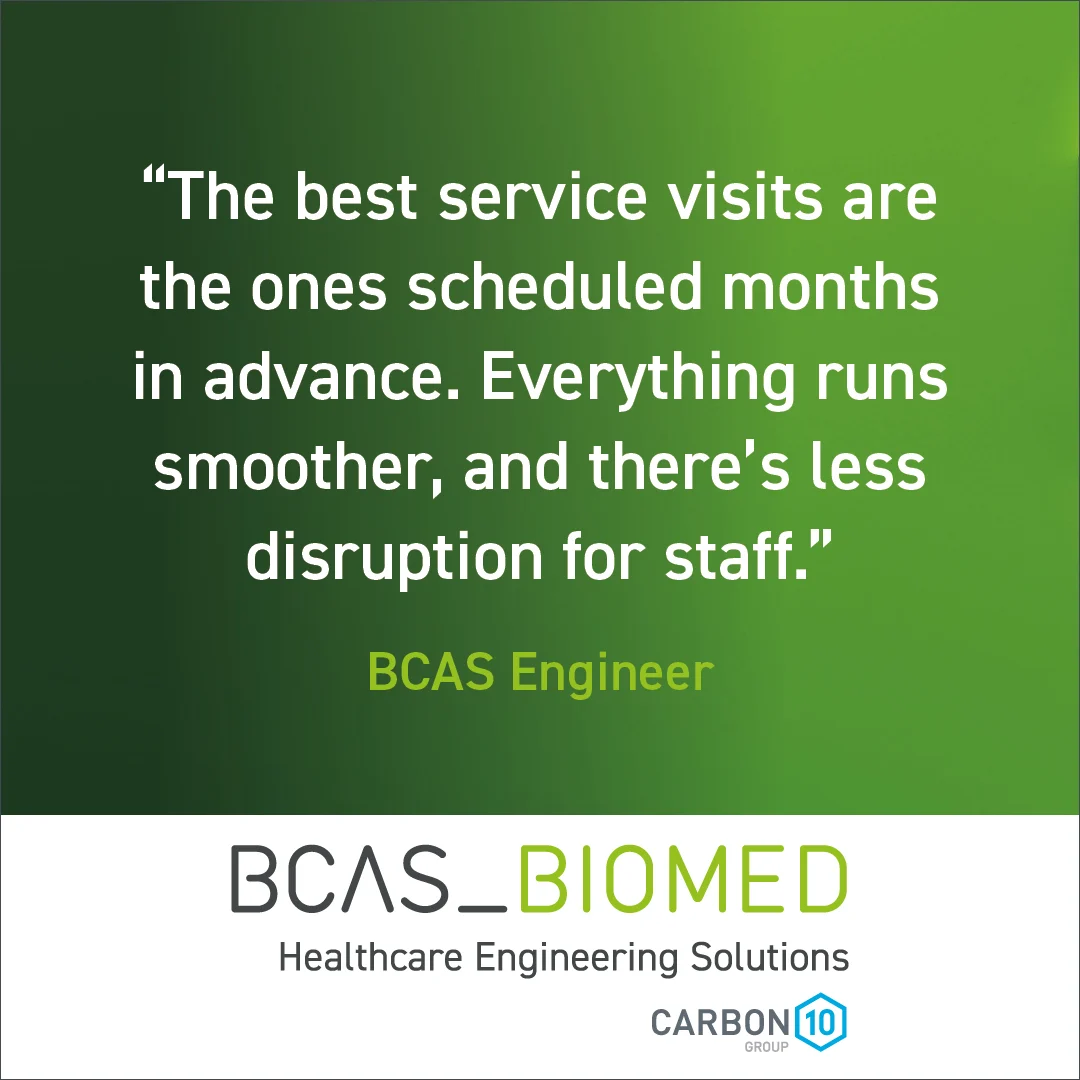
When teams plan ahead, they create calm instead of crisis. Workflows become smoother, decisions more considered, and teams better equipped to handle the unexpected. This content pieces’ graphic reflected on the importance of planning ahead from the perspective of a BCAS Biomed Engineer.
Audiences were questioned: what’s your team’s biggest win from planning ahead?
Part 3 – Planning Builds Confidence
The conversation then expanded beyond planning within engineering and reflected on how and why planning can benefit everyone.
When there’s clarity and structure, everyone can operate with greater assurance.
Part 3’s question followed as: what does effective planning look like in your environment?

Part 4 – Consistency Makes the Difference
Attention then turned to the challenge of sticking to plans.
Creating a plan is one thing, but maintaining it consistently is where real value is delivered. Without consistency, even the best plans lose their impact over time.
This reflection asked: what makes sticking to plans difficult in your department?

Part 5 – Preventing Problems Before They Begin
The series then explored the cost of poor planning, with convenience never being on your side.
When you plan, it shifts control back to teams, allowing them to prevent issues rather than react to them.
Audiences were queried: where have you seen planning prevent a crisis?

Part 6 – Planning as Strategy
Planning was then reframed through a wider lens.
It’s not just about organising schedules, it’s about reducing risk, protecting budgets and ensuring patient care continues without disruption. When done well, planning becomes a strategic advantage, not just an operational task.
This reflection challenged audiences: do you see planning as an operational task, or a strategic one?

Part 7 – Plans as Promises
The conversation then moved into mindset of planning.
Every plan represents a commitment to reliability, efficiency and patient safety. When plans are followed through, they help build trust across teams and departments.
Audiences were asked: what promise does planning help you deliver on?

Part 8 – Planning Ahead Wrap Up
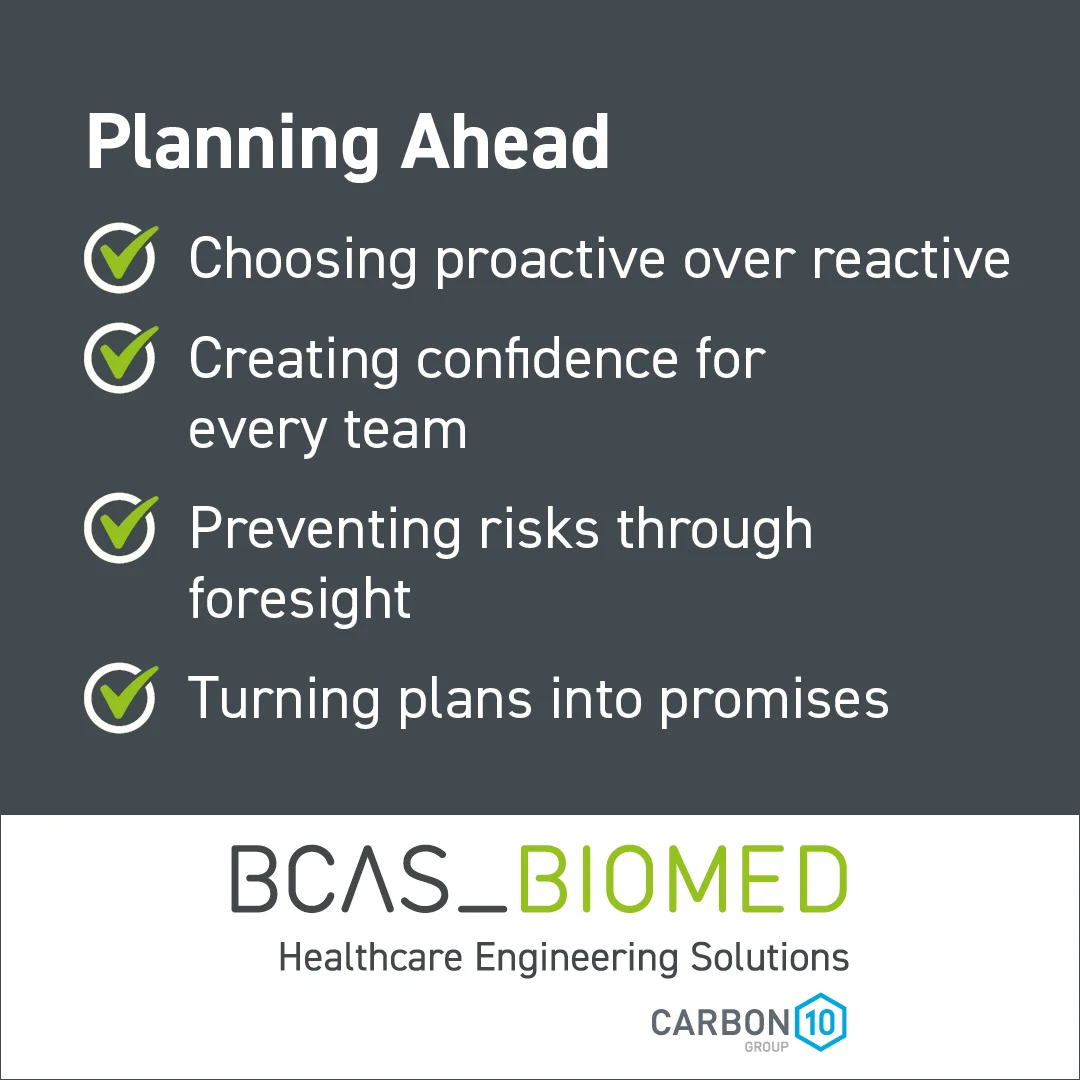
The final post reflected on the themes explored throughout the month:
✔️ Choosing proactive over reactive
✔️ Creating confidence across teams
✔️ Preventing risks through foresight
✔️ Turning plans into promises
Together, these insights reinforce a clear message: planning ahead isn’t just preparation — it’s protection.
BCAS Biomed closed the series by asking: what planning habit makes the biggest difference in your work?
Latest News
