Social Series Recap – Reducing Risk
31st May 2026
Throughout May, BCAS Biomedical (part of the Carbon 10 group) focused on the theme of ‘Reducing Risk’, highlighting the vital role that biomedical servicing plays in helping healthcare providers maintain safe, reliable and compliant equipment.
In healthcare, risk is unavoidable. However, while risk cannot always be eliminated, it can be identified, managed and significantly reduced through the right processes, expertise and preventative measures.
Here’s a look back at the key themes we covered throughout the month.
Part 1 – Risks We Can Prevent
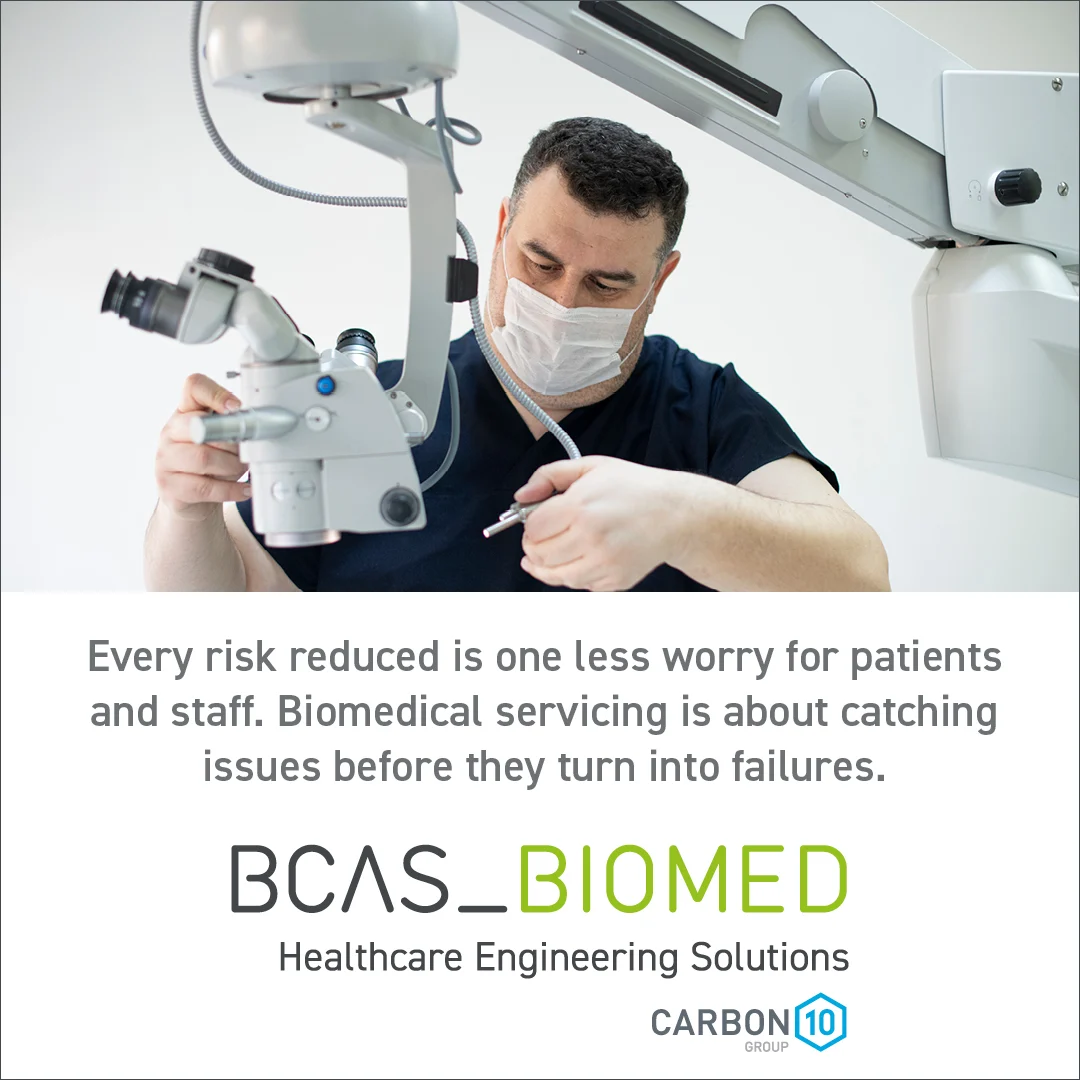
The series began by highlighting a simple but powerful message: every risk reduced is one less concern for patients and healthcare professionals.
Biomedical servicing is designed to identify issues before they become failures. By taking a preventative approach, healthcare providers can minimise disruption, improve reliability and maintain safe clinical environments.
Prevention remains one of the most effective forms of protection.
Part 2 – Prevention Starts with Awareness
Our second post emphasised that many risks can be avoided if you know what signs to look for.
This reinforces the importance of training, visibility and consistency. Effective risk management isn’t always about major interventions, often it’s the attention paid to small details that prevent larger problems from developing, it encourages the audience to discuss the most preventable risk they’ve seen.
Part 3 – When Pressure Builds, Risk Follows
Healthcare environments are full of competing priorities, making it easy for seemingly minor issues to slip through the cracks.
This post explored why risk reduction must remain a continuous focus. Small oversights can rapidly escalate into larger safety challenges, making proactive management essential for healthcare teams, asking readers to share how they prioritise risk reduction in their teams.
Part 4 – Making the Invisible Visible
Not all risks are visible at first glance. By identifying potential risks early and taking proactive action, it reduces disruption and improves reliability.
We highlighted how hidden issues such as missed calibrations, expired labels and unnoticed damage can quietly develop into much larger problems. While they may seem insignificant in isolation, these oversights can have far-reaching consequences for patient safety, compliance and operational performance. This encouraged readers to think about where they see hidden risks most often.

Part 5 – Details That Protect
Routine processes are often the most powerful tools for reducing risk.
Whether it’s completing a checklist, carrying out a calibration or performing preventative maintenance, these actions help identify potential issues before they become significant problems.
The post highlighted how consistency in everyday tasks can have a major impact on safety and performance, opening the conversation about what routines make the biggest difference.
Part 6 – Why Risk Reduction Matters
Risk reduction isn’t solely about maintaining medical devices, effective risk management protects patients, supports staff, safeguards budgets and helps maintain organisational reputations. Every action taken to reduce risk contributes to creating safer and more resilient healthcare environments.
This is why risk management should remain at the heart of healthcare operations, this reflection wanted readers to think about the most underestimated risk.
Part 7 – Making Risk Manageable
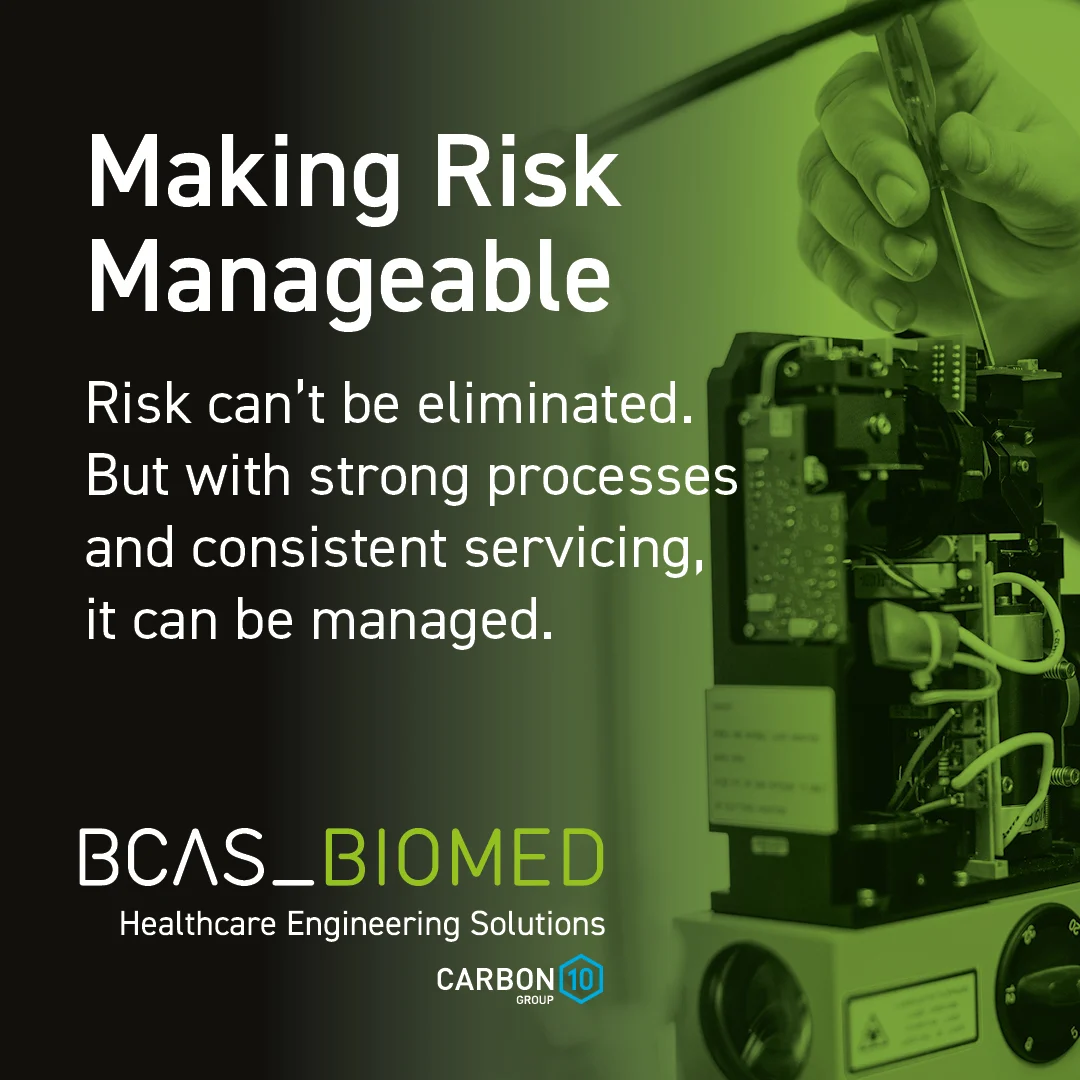
While risk can never be eliminated, it can be effectively managed. Strong processes, regular servicing and preventative maintenance programmes help organisations control risk and maintain confidence in their equipment and systems.
Managed risk enables healthcare professionals to focus on delivering care, knowing that the equipment they rely upon is functioning safely and reliably. This post asked the audience where they feel risk is highest in their day.
Part 8 – Reducing Risk Wrap-Up
To conclude the series, we reflected on the key themes discussed throughout the month.
Together, these conversations demonstrated the importance of:
• Spotting preventable issues before they escalate
• Making hidden risks visible
• Protecting patients, staff, budgets and reputations
• Building confidence through effective risk management
Reducing risk will always be an ongoing process, but through proactive servicing and strong operational practices, healthcare organisations can create safer environments for everyone.
Ending the series with readers thinking about one main risk they think healthcare can’t afford to ignore.
At BCAS Biomed, we’re proud to support healthcare providers with servicing and maintenance solutions that help reduce risk, improve reliability and protect patient care.
Latest News